

A plan that grows
Foods to favour, foods to ease off, and habits worth trying — each with its evidence rating and a plain-language reason. On Premium the plan evolves week by week as you tell it what's working.
Choose a goal. Valutri builds you a food plan where every suggestion carries its evidence rating — so you can see the difference between settled science and someone's opinion. No calorie counting. No bad foods. No miracle promises.
A source of protein and omega-3 fatty acids, associated with supporting normal energy metabolism.
Contribute iron and folate, which many people find helps steady energy across the day.
Dietary nitrates are being studied for blood flow and perceived stamina; the picture is promising but unsettled.
Long used as a pick-me-up in traditional practice. Formal human evidence is limited and mixed — we say so.
Tiredness, bloating, poor sleep, foggy afternoons — these are among the most common complaints adults have, and most of us file them under "just how I am." Meanwhile the advice online is loud, contradictory and confident. Valutri exists for the gap in between: the honest middle, where you get told what food is actually linked to how you feel, and how sure anyone really is.
Of UK adults report tiredness that has lasted a month or longer — in a population survey of more than 15,000 people. UK population-based postal survey, reported in Patient / NICE CKS guidance
GP consultations in the UK have tiredness as the principal complaint. It is so common in practice that it has its own shorthand: TATT — "tired all the time". NICE Clinical Knowledge Summary, Tiredness/fatigue in adults
Of a 163,748-person English sample self-reported insomnia symptoms — while only 6% had anything about it recorded in their GP notes. Most people simply live with poor sleep. UK Biobank analysis, BMJ Open, 2024
Women of reproductive age in the UK are iron deficient — one of the most common and least discussed reasons for feeling constantly drained. National Diet and Nutrition Survey
UK adults are vitamin D deficient, with levels falling further between October and March. National Diet and Nutrition Survey
Of people with bloating, abdominal pain or diarrhoea ever raise it with a healthcare professional. The rest normalise it. Rome Foundation Global Epidemiology Study analysis, 2026
These are not rare problems — they are the background hum of ordinary British life, and most of them never reach a GP. Poor diet quality is associated with more severe digestive symptoms, anxiety and low mood, yet the experiences arrive separately, without labels, and rarely with anyone honest enough to say which part of the advice is settled and which is guesswork. That is the job we gave Valutri.
Pick the goal that matches how you want to feel. Everything else follows from it.
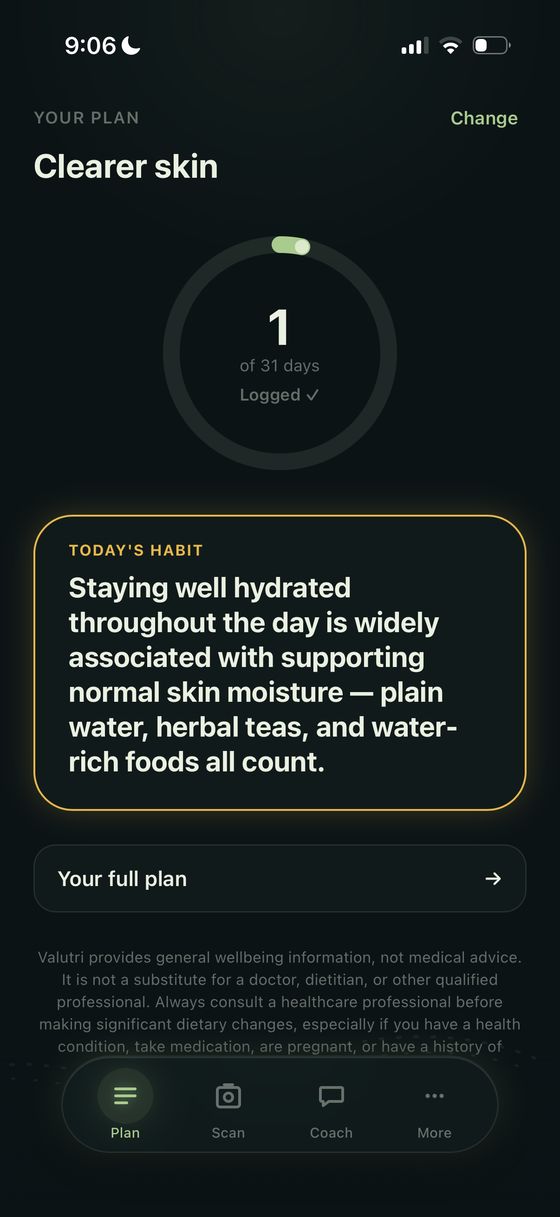
Foods to favour, foods to ease off, and habits worth trying — each with its evidence rating and a plain-language reason. On Premium the plan evolves week by week as you tell it what's working.
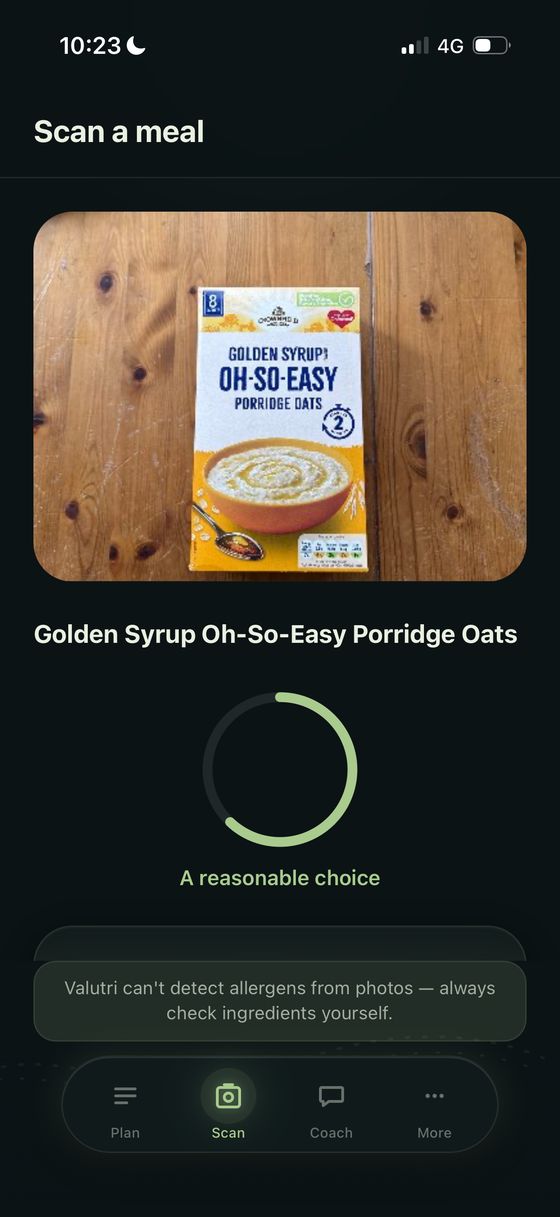
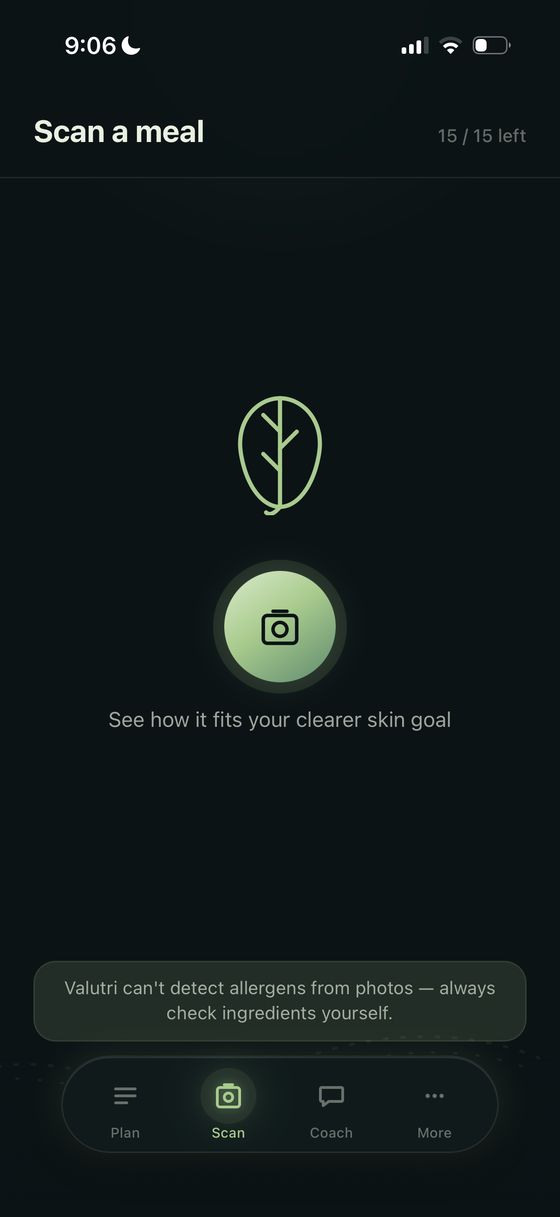
Point your camera at what you're about to eat and see how well it fits the goal you chose. A friendly nudge with a suggestion, never a verdict on you — and never a calorie count.
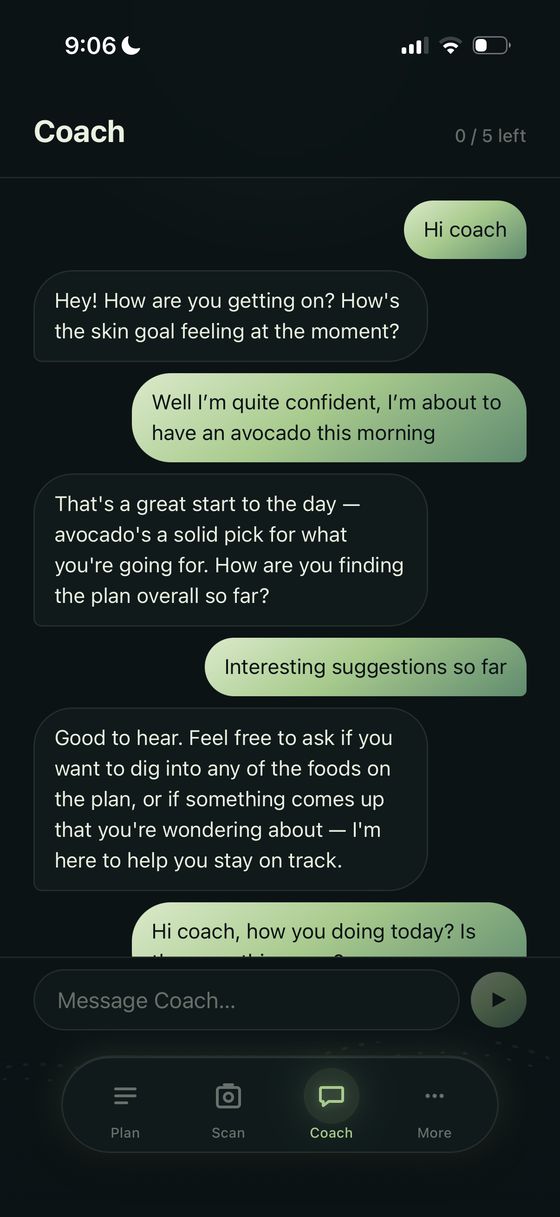
Tell it about the interview that turned lunch into a drive-through. It remembers your week, adjusts without judgement, and checks in between conversations like someone who actually cares how you're getting on.
Two independent videos on how nutrition advice gets sold online — and why the gap between confident influencer claims and actual evidence is worth taking seriously. Neither is ours, and neither is an endorsement of Valutri. They just explain the problem better than a marketing page can.
This is the environment Valutri was built for. We can't stop anyone making confident claims online — but we can show you, food by food, exactly how strong the evidence behind ours is.
Calm, quiet, and free of the noise most nutrition apps make. Everything below is the real app, not a mockup.
Every food we suggest carries one of three ratings. We would rather tell you something is uncertain than pretend it isn't — which is the whole reason this app exists.
Consistent human evidence supports the link. This is about as settled as nutrition science gets.
Promising and supported by some studies, but not settled. Worth trying, worth holding lightly.
Commonly used or widely believed, with weak or mixed formal evidence. We label it rather than quietly dropping it.
Written down so you can hold us to them.
Count your calories or set you a restriction target.
Call a food good or bad, or make you feel judged for eating it.
Promise a result by a deadline, or claim food treats or cures anything.
Show you ads, or sell your health information to anyone.
Take money from a food brand to recommend its products.
Your profile and history stay on your device. Meal photos are sent only to generate your result and are not kept on our servers. Valutri uses AI — including third-party models — to generate plans, scan results and coaching, and we say so plainly inside the app. We don't show ads, and we don't sell your data to anyone.
Valutri is built by Xeraxon Care Ltd, a UK technology company based in Barnsley, South Yorkshire, working across health, accessibility and digital services. Valutri began with a simple frustration: nutrition advice online is delivered with a confidence the underlying science rarely has, and the apps meant to help often make people feel worse about eating.
We decided the honest version was worth building — an app that shows its working, refuses to shame anyone, and is straightforward about what food can and cannot do. Valutri is developed as part of the Furnace programme at Barnsley's Digital Media Centre.
A wellbeing nutrition app. You choose a goal — more energy, better sleep, better digestion and others — and Valutri generates a personalised food plan in which every suggestion is labelled by evidence strength. It also includes a camera meal scanner and a supportive AI coach.
Valutri does not count calories and does not sort foods into good and bad. It looks at food quality relative to the goal you chose, and it shows you how strong the evidence behind each suggestion is. Progress tracks your consistency — the part you control — rather than promising an outcome nobody can guarantee.
No. Valutri provides general wellbeing information only. It does not diagnose, treat or prevent any condition, and it is not a substitute for a doctor, dietitian or other qualified professional. If something about your health is worrying you, please speak to a professional.
Yes. Allergies, intolerances and dietary patterns — vegan, vegetarian, pescatarian, halal, kosher and others — are treated as strict exclusions, including derived ingredients. You can also list any other foods you avoid in your own words, and Valutri will work around them.
Free to start, including one goal plan a month and a set number of meal scans. Premium is £14.99 a month or £149.99 a year, unlocking unlimited goals, unlimited scans, a plan that evolves weekly, and unlimited coaching.
Valutri is designed with that in mind: no calorie targets, no restriction goals, no streak-shaming, and no progress that can be lost by eating something. If you tell us during setup, we soften the experience further and you can turn the scanner off entirely. It is still not a substitute for professional support, and we will always encourage you to seek it.
Free to start. One goal, one honest plan, and no pressure to upgrade.
Free to start. Premium £14.99 a month or £149.99 a year.
Valutri is on Google Play now, with iOS coming soon. Leave your email and we'll tell you the day it lands — nothing else.